personal project
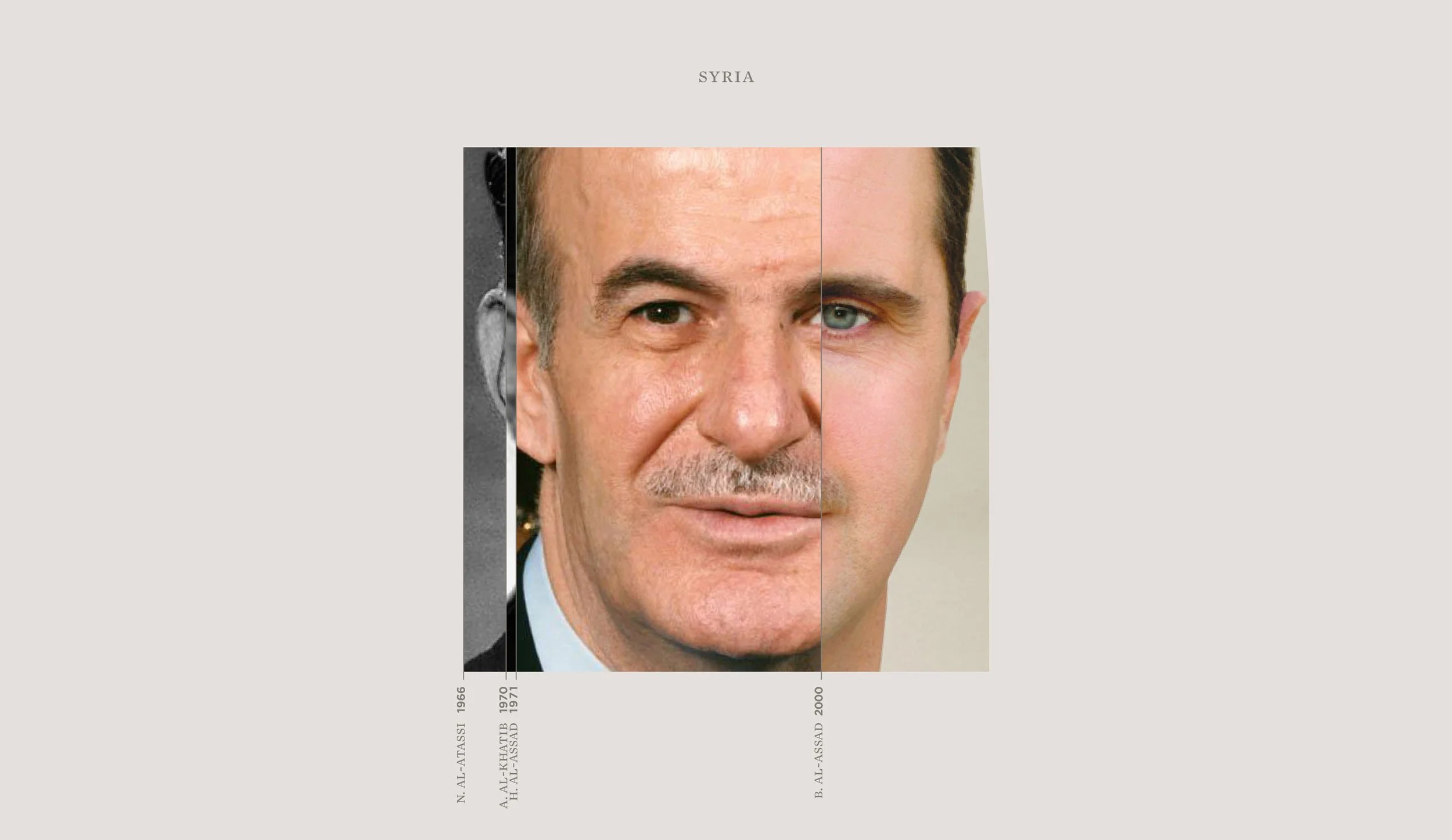
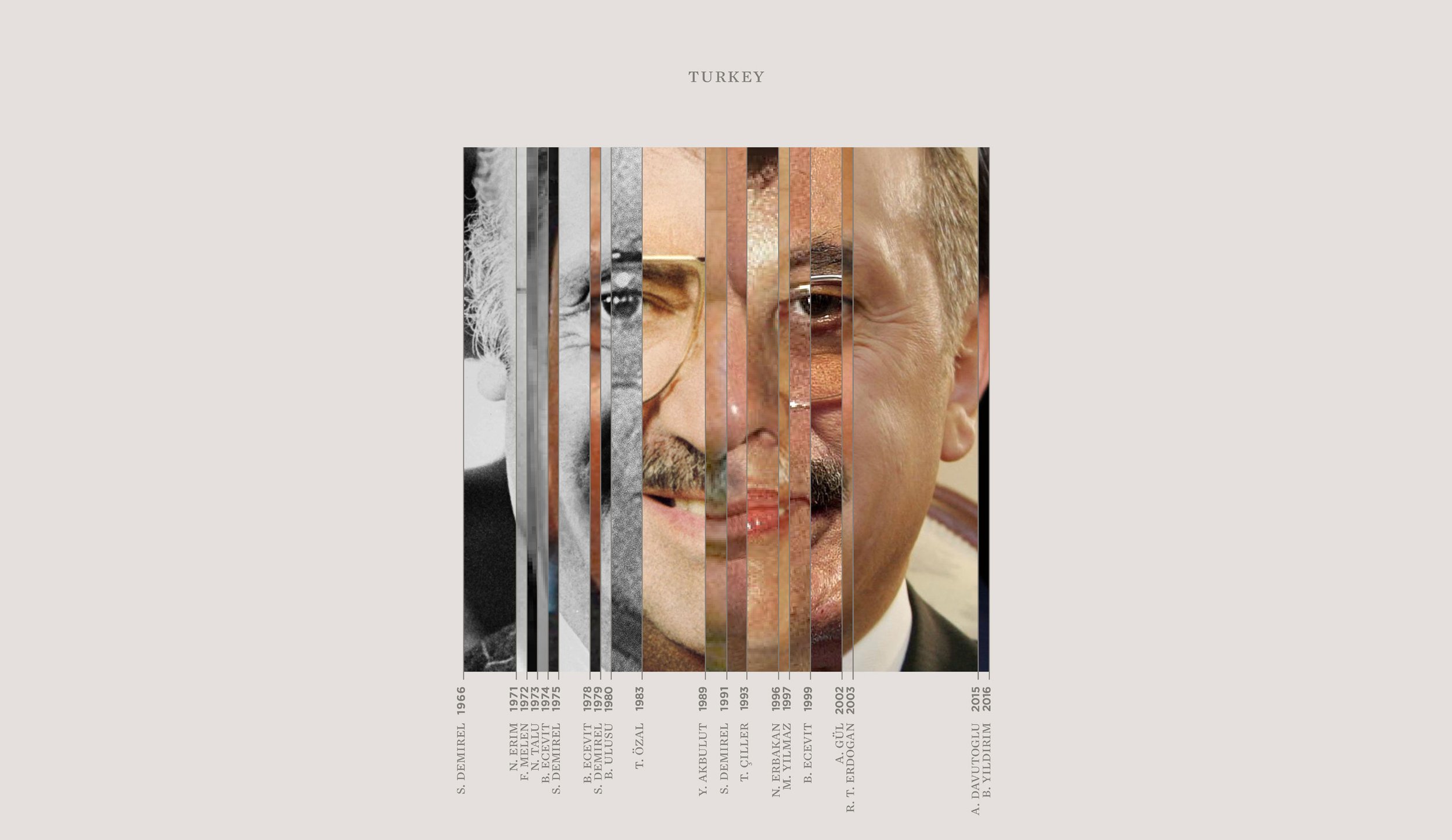
Creating portraits of nations from 50 years of their leaders.
_
You rarely think of Germany without picturing Angela Merkel. Or Russia without Vladimir Putin. Whether we like it or not, a country's leader becomes the face of the country itself.
But is that face a reflection of the people, or just a snapshot of who happened to be in power?
Face of a Nation answers by going wider. For each country, every leader from the past 50 years is layered into a single composite portrait. A face shaped by who's been in charge, not who currently is.


The source material is part of the meaning. The project uses the most commonly seen images of each leader online, because how a leader is photographed is itself political.
Official US presidential portraits are nearly identical: every president facing right, smiling. Russian leaders are always serious, never smiling. North Korea's three leaders are essentially the same photograph, three generations of continuity. South Africa's face is half-white, half-black, the post-apartheid arc visible at a glance. Italy's composite is strangely uniform; almost all of its leaders wear glasses, almost all share a certain look.
I started the project in 2016, after the November 2015 elections in Turkey. The landslide result was unexpected, and the question it left me with wouldn't let go: what does a country look like when you see all its leaders at once?
The project doesn't argue a position. It hands the question to the viewer. What do we actually mean when we call a leader the face of a nation?
Face of a Nation has been exhibited in Amsterdam, entered the permanent collection of Poster House New York, and been featured in BBC Future, Hyperallergic, VICE and others.